
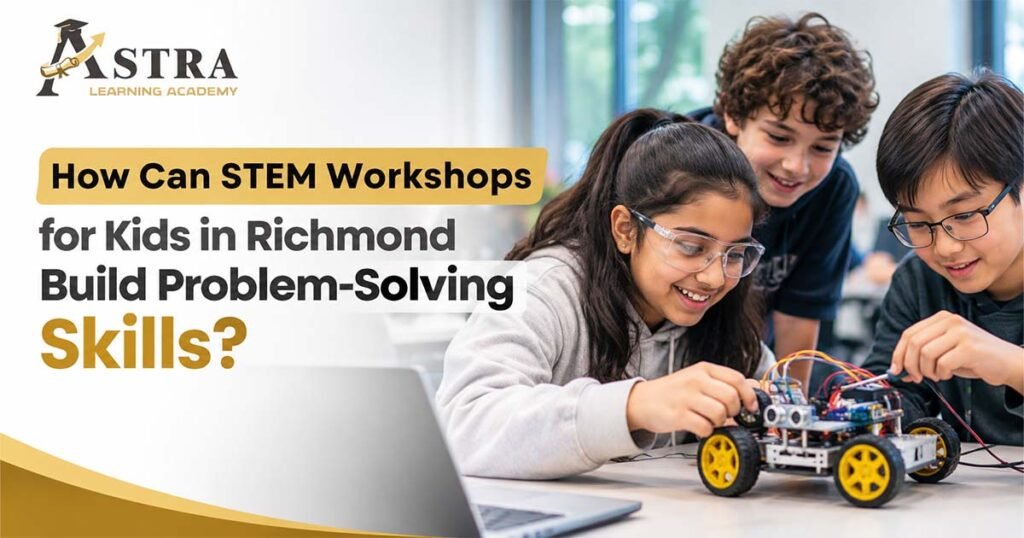
STEM workshops for kids in Richmond help children build cognitive skills by doing hands-on activities in science, technology, engineering, and math. Rather than just reading about ideas, students get to try things out, solve problems, and learn from their mistakes. This approach sparks curiosity, logical thinking, creativity, and confidence, and helps kids see how what they learn in class connects to real life.
Why Does Hands-On Learning Help Children Understand Difficult Concepts?
Children often understand new ideas more easily when they can see how something works. Hands-on activities give them opportunities to explore concepts instead of memorizing information without understanding it.
Coding activities help them organize instructions and find mistakes. These hands-on experiences make abstract ideas easier to understand.
How Do Practical Activities Promote Independent Thinking?
When children face a challenge, they must consider different approaches before choosing a solution. They learn to observe problems, ask questions, and change their methods when something does not work.
This process also teaches patience. Children start to see mistakes as helpful information instead of reasons to give up. Over time, these habits can help them learn in different school subjects.
What Skills Can Children Develop Through STEM Activities?
STEM activities help kids build skills they use both in school and in daily life. The benefits depend on the type of activity, the child’s age, and how much guidance they get.
How Do Science and Coding Activities Build Creative Problem-Solving Skills?
Science experiments help kids observe, consider possible explanations, and examine results. Coding activities teach them about logical steps, patterns, and how to solve problems one step at a time.
Engineering challenges get students to plan, build, test, and improve their ideas. All these activities give them chances to practice critical thinking and try out different solutions.
Through STEM workshops for kids in Richmond, children can explore these concepts in an enjoyable learning environment.
How Can Parents Choose Learning Opportunities That Match Their Child’s Needs?
Parents should think about their child’s interests, current skills, and learning goals before picking a program. Some kids like working with others, while others may need more support to join in confidently.
Look for programs that get kids involved and describe things clearly. Activities should fit the child’s age and skills, while still being challenging enough to keep them interested.
When Might Additional Academic Support Be Helpful?
Workshops teach practical ideas, but some students need extra help to build strong academic basics.
Parents looking at tutoring Richmond options should think about whether their child needs help with certain subjects, more practice, or extra challenges. The best support must match the student’s real learning needs, not just use a one-size-fits-all approach.
Students who require closer guidance may also benefit from one to one tutoring Richmond programs. Individual instruction allows a tutor to focus on particular difficulties, adjust explanations, and help students practise concepts at their own pace.
Conclusion
Giving children the freedom to ask questions, try new ideas, and solve problems helps them learn. STEM activities make learning enjoyable while building curiosity and logical thinking. Parents can help by choosing activities that suit their child’s interests and abilities. When looking at workshops or tutoring Richmond programs, choose ones that help children understand concepts and build confidence in their own thinking.
Frequently Asked Questions
What age should children start learning STEM?
Kids can start learning basic STEM ideas early with age-appropriate activities. Simple building, counting games, and supervised experiments introduce these concepts naturally.
Do STEM workshops help children with mathematics?
STEM activities give kids hands-on ways to learn about measurement, patterns, shapes, and logical thinking. These experiences can help strengthen the math skills they learn at school.
How often should children participate in STEM activities?
How often kids do STEM activities depends on their schedule, interests, and goals. Giving them regular chances to explore, practice, and review ideas helps them build skills over time.