
How We build Mathematical Mastery
The Astra Learning Academy Approach
Our teaching approach is built on decades of research into how students learn mathematics most effectively. Rather than following a single rigid method, we draw from multiple evidence-based approaches and customize our instruction to match each student's learning profile.
The Five Pillars of Our Method
01
Diagnostic Assessment & Profiling
We begin by thoroughly understanding where each student currently stands and how they learn best.
Comprehensive Initial Assessment
When a student starts with us, they complete a multi-part assessment that goes far beyond a typical math test. We assess:
Content knowledge: What mathematical concepts does your child understand? What gaps exist?
Problem-solving approach: How does your child approach problems? Do they dive in immediately or plan first? Do they check their work?
Number sense: Does your child understand what numbers mean, how they relate to each other, and how quantities work?
Learning preferences: Does your child benefit more from visual demonstrations, verbal explanations, hands-on manipulatives, or written representations?
We combine written assessments, verbal questioning, and observation to get a complete picture. This assessment isn’t stressful or high-stakes—it’s collaborative and designed to help us understand your child as a learner.
Ongoing Assessment
We don’t just assess at the beginning. Throughout your child’s time with us, we continuously monitor progress, identify new concepts to focus on, and adjust instruction accordingly.
02
Diagnostic Assessment & Profiling
Based on assessment findings, we design a completely customized learning plan specific to your child’s needs.
Individual Learning Plans
Rather than moving all students through the same curriculum at the same pace, each student’s learning plan is unique. It specifies:
Current proficiency level and identified learning gaps
Specific concepts and skills to focus on over the next 4-12 weeks
Teaching methods that work best for this particular learner
Recommended pace (accelerated, standard, or slower-paced)
Connections to school curriculum and the student’s current coursework
Short-term and long-term learning goals
Flexibility Within Structure
While we maintain a clear learning plan, we remain flexible. If we discover that your child masters a concept faster than expected, we accelerate. If your child needs more time to develop understanding, we provide it. If a teaching approach isn’t working, we switch to a different method.
Customized Learning Pathways
Based on assessment findings, we design a completely customized learning plan specific to your child’s needs.
Individual Learning Plans
Rather than moving all students through the same curriculum at the same pace, each student’s learning plan is unique. It specifies:
Current proficiency level and identified learning gaps
Specific concepts and skills to focus on over the next 4-12 weeks
Teaching methods that work best for this particular learner
Recommended pace (accelerated, standard, or slower-paced)
Connections to school curriculum and the student’s current coursework
Short-term and long-term learning goals
Flexibility Within Structure
While we maintain a clear learning plan, we remain flexible. If we discover that your child masters a concept faster than expected, we accelerate. If your child needs more time to develop understanding, we provide it. If a teaching approach isn’t working, we switch to a different method.
02
03
Multi-Sensory, Multi-Modal Instruction
We recognize that students have different learning preferences, and we employ multiple instructional modalities within each lesson.
Visual Learning
We extensively use diagrams, graphs, number lines, geometric figures, color-coding, and visual representations. Visual learners see mathematical relationships displayed. We might draw a picture to show that division is about making equal groups, or use area models to demonstrate multiplication.
Verbal Instruction & Discussion
We explain concepts using clear, carefully-chosen language. We ask probing questions that guide students toward understanding. We have discussions about mathematical thinking and strategies. Verbal interaction helps students organize their thinking and solidify understanding.
Kinesthetic / Hands-On Learning
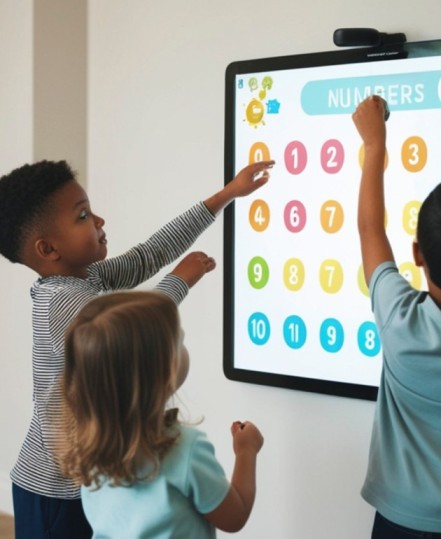
Many students truly understand mathematics through physical interaction. We use manipulatives (concrete objects representing numbers and operations), have students act out problems, build structures, or use finger strategies. When students physically experience mathematical concepts, understanding becomes visceral and memorable.
Mental Strategies
Rather than relying on calculators or written algorithms, we teach mental math strategies and encourage students to develop their own efficient problem-solving approaches. This builds number sense and flexible thinking.
Written Representation
We use traditional symbolic notation, but in context. Rather than starting with abstract symbols, we often build from concrete to pictorial to abstract representations.
04
Building Strong Foundational Understanding
Rather than rushing through topics, we ensure students develop deep understanding of foundational concepts before moving forward.
Number Sense Development
Number sense—understanding what numbers mean, how they relate, and how operations work—is fundamental. We never rush past this. We help students:
Develop confidence counting and understanding quantity
Understand part-whole relationships
Grasp the meaning of each operation (addition, subtraction, multiplication, division)
See connections between operations
Build mental math proficiency
Conceptual Before Procedural
Students often learn procedures (steps to follow) before understanding why those procedures work. We reverse this. First, students develop conceptual understanding of what an operation means. Then, they learn procedures as efficient shortcuts for what they already understand. This approach leads to deeper learning and better retention.
Gradual Complexity Building
We scaffold instruction carefully, starting with simpler concepts and gradually adding complexity. Students don’t jump from single-digit addition to multi-digit addition with regrouping without first firmly understanding single-digit operations.
Building Strong Foundational Understanding
Rather than rushing through topics, we ensure students develop deep understanding of foundational concepts before moving forward.
Number Sense Development
Number sense—understanding what numbers mean, how they relate, and how operations work—is fundamental. We never rush past this. We help students:
Develop confidence counting and understanding quantity
Understand part-whole relationships
Grasp the meaning of each operation (addition, subtraction, multiplication, division)
See connections between operations
Build mental math proficiency
Conceptual Before Procedural
Students often learn procedures (steps to follow) before understanding why those procedures work. We reverse this. First, students develop conceptual understanding of what an operation means. Then, they learn procedures as efficient shortcuts for what they already understand. This approach leads to deeper learning and better retention.
Gradual Complexity Building
We scaffold instruction carefully, starting with simpler concepts and gradually adding complexity. Students don’t jump from single-digit addition to multi-digit addition with regrouping without first firmly understanding single-digit operations.
04
05
Confidence & Motivation Development
We intentionally build mathematical confidence, which is essential for learning.
Psychological Safety
Students learn best when they feel safe taking intellectual risks. Our learning environments are explicitly structured to be judgment-free. Wrong answers aren’t failures—they’re learning opportunities. We use language like “I notice you approached it this way; let’s explore what happens” rather than “That’s wrong.”
Celebrating Progress
We specifically highlight and celebrate student progress. We point out improvement, acknowledge effort, and recognize achievements. When students see themselves making progress, motivation increases dramatically.
Challenge at the Right Level
Motivation is highest when the task difficulty is just slightly beyond current ability (what psychologists call “flow state”). Too easy, and students get bored. Too hard, and they get frustrated. We calibrate difficulty carefully to maintain engagement and motivation.
Building Agency
We help students develop a sense of agency—the belief that their effort matters and that they can solve problems through sustained effort. We use language that emphasizes growth and effort rather than fixed ability (“You haven’t mastered this yet” rather than “You’re not a math person”).